 English
 Arabic
 Chinese (Simplified)
 Dutch
Dutch French
 German
 Indonesian
 Italian
 Japanese
 Khmer
Khmer Korean
 Lao
Lao Portuguese
 Russian
 Spanish
 Thai
Thai Vietnamese
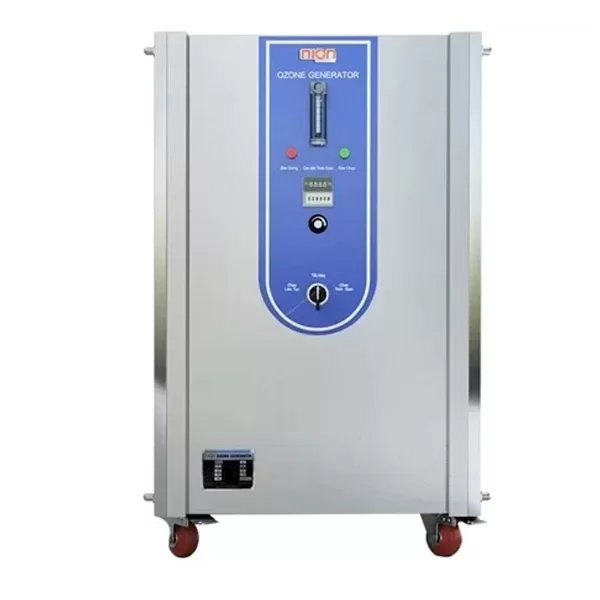
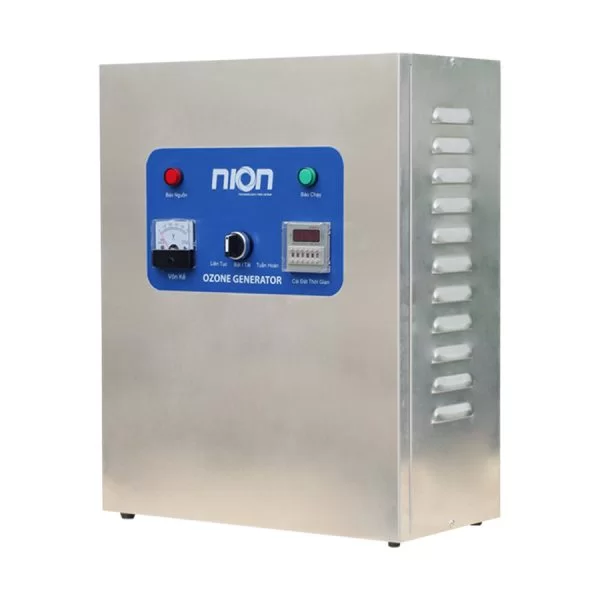
Nion N50 Industrial Ozone Generator
Ozone Output: 50 g/h
Ozone Concentration: 85 g/m³
Oxygen Flow Rate: 10 L/min
Power Supply: 220V – 50Hz – 950W
Dimensions: 120 × 125 × 45 cm
Weight: 85 kg
Water-Cooled Ozone Chamber: 5 L/min
Machine Housing Material: Stainless steel
Stainless-Steel Frame: 30 × 30 mm box frame
Mixing Pump + Specialized Injector
Ozone/Water Ratio: 8–10%
Pressure Balancing Valve: LS 01I type
Warranty: 3 years for the ozone module & 12 months for the machine body
The Nion N50 industrial ozone generator, with an output of 50 g O₃/h, is widely used in swimming pool water treatment, bottled drinking-water production lines, food detoxification, industrial sanitation, air disinfection, light industrial wastewater treatment, and odor control in exhaust systems.
Components of the Nion N50 Industrial Ozone Generator (50 g/h)
-
Natural Oxygen Concentrator – 10 L/min, delivering >90% high-purity oxygen for stable ozone production; medical-grade purity and performance.
-
Industrial-grade High-Voltage Plasma Ozone Chamber – 50 g/h, using advanced plasma discharge technology with a lifespan of over 100,000 hours; equipped with combined aluminum heat-sink cooling and water-cooling technology for stable long-term operation.
-
Control System: PCB controller, fuses, circuit breakers, and Teflon ozone-resistant gas tubing.
-
Physical Cooling System: Integrated cooling fans for enhanced airflow and heat dissipation.
(Actual installation images can be added here if needed.)
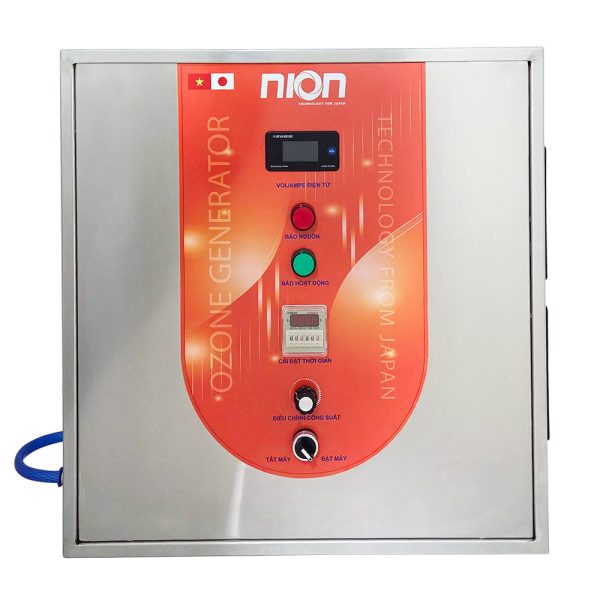
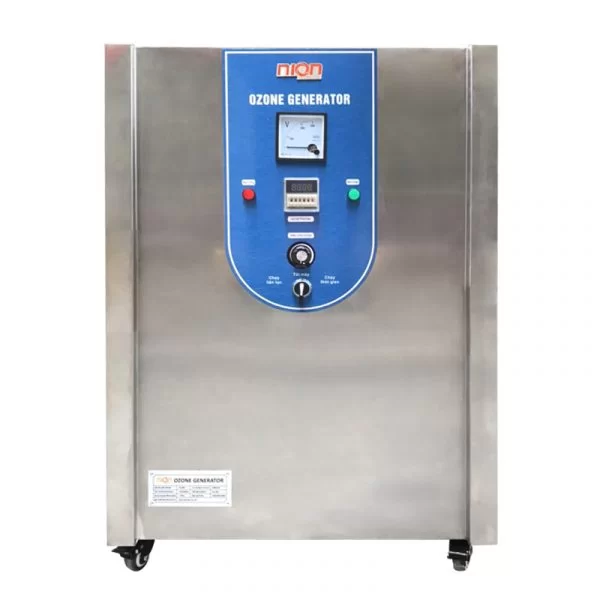
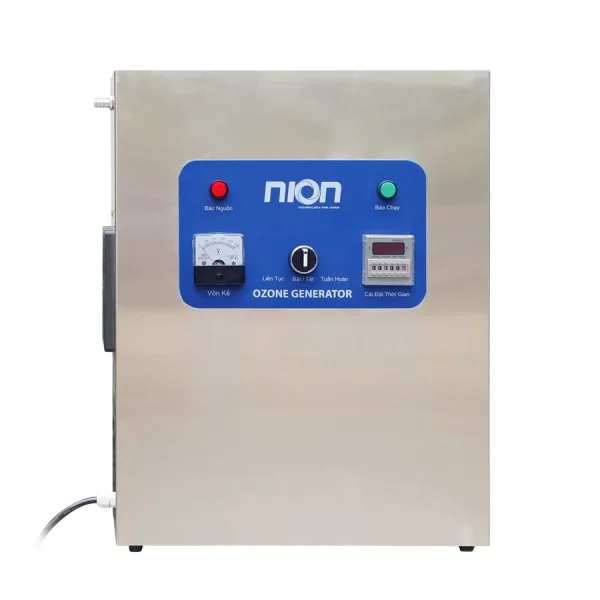
Comparison: Nion N50 vs. Nion N20
(If bạn muốn tôi dịch bảng so sánh chi tiết, gửi nội dung tôi sẽ dịch đúng chuẩn.)
Applications of the Nion N50 in the Food Industry
USDA and FDA have officially approved ozone as an antimicrobial agent in food processing. With this approval, ozone has become an exceptional solution for food disinfection at a relatively low operational cost.
Key Advantages of Ozone
-
The strongest oxidizer available today
-
Environmentally friendly
-
No storage or transportation required
-
3× more effective than chlorine
-
Instant pathogen inactivation
-
Leaves no chemical residues or by-products
-
Excellent for odor removal using ozone oxidation
How Ozone Works
Ozone in Food Processing
Because ozone is a powerful yet safe disinfectant, it is ideal for controlling microbial growth on food products and equipment in food-processing facilities. Ozone disinfects effectively without adding any chemical residues, making it perfect for high-standard food industries.
Ozone helps:
-
Protect food surfaces
-
Inhibit bacterial growth
-
Slow down spoilage
-
Increase safety compared to traditional sanitizers
Common Applications of Ozone in Food Production
-
Washing fruits and vegetables
-
Meat and poultry processing
-
Seafood processing & aquaculture
-
Food preservation
-
Irrigation water treatment
-
Air-quality control in processing rooms
-
Beverage production
-
Ozonated ice for packaging fresh fish and seafood
-
Ozone gas in cooling systems to inhibit microbial growth on meat surfaces
Additional Benefits in the Food Industry
-
Improves taste and odor
-
Reduces spoilage-causing microorganisms → longer shelf life
-
Saves water usage in washing processes
-
Removes pesticides and chemical residues from produce
-
Does not create harmful chlorinated by-products
-
Minimizes cross-contamination
-
No need for storage tanks or transport of chemicals
-
Approved for organic food production
Benefits of Using Ozone in Cold Storage Facilities
Ozone Applications for Cold Rooms & Sterile Rooms
-
Extends product shelf life
-
Controls airborne microorganisms (recommended ozone < 0.3 ppm)
-
High-level ozone for empty-room sterilization
-
Surface sanitation for tools and equipment
-
Prevents mold and mildew growth
-
Eliminates unpleasant odors
-
Reduces risk of cross-contamination
-
Removes ethylene gas (slows ripening of fruits & vegetables)
Reviews
There are no reviews yet.